A
At the spring equinox, signs of growth were scarce here, but just weeks later, hope keeps popping up everywhere. From tiny shoots of crocus pushing through the mulch of leaves gifted by our many trees, to the newly discovered patch of early flowering tulips planted by a previous owner, to the fat red buds that cover the grand old maple like spring flowers. Animals flock to the garden in increased numbers and diversity. A woodpecker has taken up residence in a rotting old stub, rabbits gorge themselves on the remnants of my roses, and a host of small birds and squirrels compete for the seeds and suet. It is a slow, calm regeneration of life, heralded by birdsong. The energies of ancient gods and goddesses, fairies and gnomes, feel absent still. The green man, a version of the old forest gods, so virile that his body and face is made of of vegetation about to burst into bloom, can’t be spotted among the bare trees, and even though the Greeks and Roman’s held their sacred celebrations for Dionysus and Bacchus at the temples and amphitheaters in March, east Ontario isn’t ready for dancing, drinking and chanting outdoors just yet.
Like all things in nature, spring is a process, not a date, and it can’t be forced. Seasonal living means living on nature’s terms. I think this is the essence of any nature-based religion, whether new or ancient: realizing that nature is a living being, an independent agent that we are completely dependent on for survival. Nature’s bounty and beauty is a divine gift, not a “thing” that we can or are supposed to control. Our role is to maintain a healthy relationship with the earth, to understand it. A big part of this is surrendering to the fact that nature is beyond control, and have faith that the laws that govern the universe will continue to apply and let us live and thrive. Have faith that spring will come back every year, that life will continue.
I don’t pay too much attention to specific dates for the early winter and spring celebrations for this very reason. The time of Imbolc is from February 2 to the Vernal Equinox, and any work to connect with this season, celebrations and magic, can be done during this month-long period. The spring equinox is an astronomical event, marking the sun’s crossing over the equator which brings more light and warmth to the Northern hemisphere. The growth of spring continues from this moment on through Beltane on May 1 and all the way until the summer solstice. Different phases and energies of spring emerge throughout this period and they can all be celebrated. Staying attuned, observing and absorbing this season is more important than performing rituals.
So what are the energies, themes and characteristics of early spring? We’ll examine this by focusing on two concepts: sacrifice and equilibrium, an object: trees, and a deity: Pan. By immersing ourselves in nature, history and mythology we can bring the mysteries of spring alive and create a meaningful story with pillars that you can anchor any spiritual and magical work on during this period.
Sacrifice
In heathen times – and long after – people from all cultures expressed their hope for the return of spring through rituals and sacrifice. These sacrifices would consist of produce, animals (bulls, bears, goats) and even people. The idea behind sacrifice is transactional: you give something to the gods and in return you will receive what you need. Need – not want. We have to remember that in those days, the survival of a tribe and whole societies depended on the harvest and hunt. Life centered on survival, on food. If the sun and rain and spring gods were not pleased, everyone would starve. Today, most of us have ways of ensuring our survival to much greater extent, so much that we don’t think about it at all. But even this is changing as we realize that our quest for excessive material wellbeing has damaged nature so much that we need to transform our ways of living rapidly. The already visible, dramatic effects of climate change and mankind’s role in this tragic evolution reminds us all of our utter dependence on the planet we inhabit.
What does Sacrifice look like today? On a physical level, sacrificing material standards. For example, by downsizing your home, starting an organic mini-farm in your backyard, planting trees, driving an electrical car, stop wasting money on cheap clothes made of plastic, teach children about nature – we all know the recipe here. Most of us are not going to go all out all the time, but we all can do something and spring is the excellent time to start.
Sacrifice is not easy, it’s giving up a part of yourself, your goals, your time, your money and your desires to serve a bigger purpose such as the family, the tribe, this planet, humanity, religion, art or whatever you truly believe in. And sometimes you need to make sacrifices to be able to serve yourself better. Give up some aspirations that bring nothing but stress and misery and create room for life to simply unfold in its own way.
Equilibrium
The vernal equinox marks an equilibrium: the balance between light and dark. On this day, night and day are equal in length and the presence of the sun grows stronger for every day until the summer solstice – the astronomical beginning of summer, and the longest day of the year. The power of the sun now reign supreme, fueling growth everywhere. We humans feel the pull of the growing sun in our bodies. As do our pets. We’re restless, both me and the cat, our whole beings are itching to get outside, be active – go for a walk, uproot some old bushes, hunt mice and explore the untouched, distant corners of our garden universe. And this is where balance comes in. The returning light wakes up the body, commands it to be active and it’s easy to forget that we still need to be still and tune into our inner universe ever so often.
Living with the seasons is a very primal way of seeking balance, it is the base which many of us have abandon, not necessarily because we live in cities, but because we live in front of screens and in a world of constant active ego that believes that if we just push harder more things will happen faster and favorably to us when the truth is that everything is connected and everything needs to be aligned for anything to happen at all. This is not random, not luck. We can work to bring the world around us into harmony and balance. But not by focusing on asserting our own will upon it, that will only be met with resistance. Instead, we need to work on our relationships – with ourselves (our true, inner selves), other people, nature and God. Balance between being assertive and receptive, acting and listening, expending energy and regenerating strength.
Trees
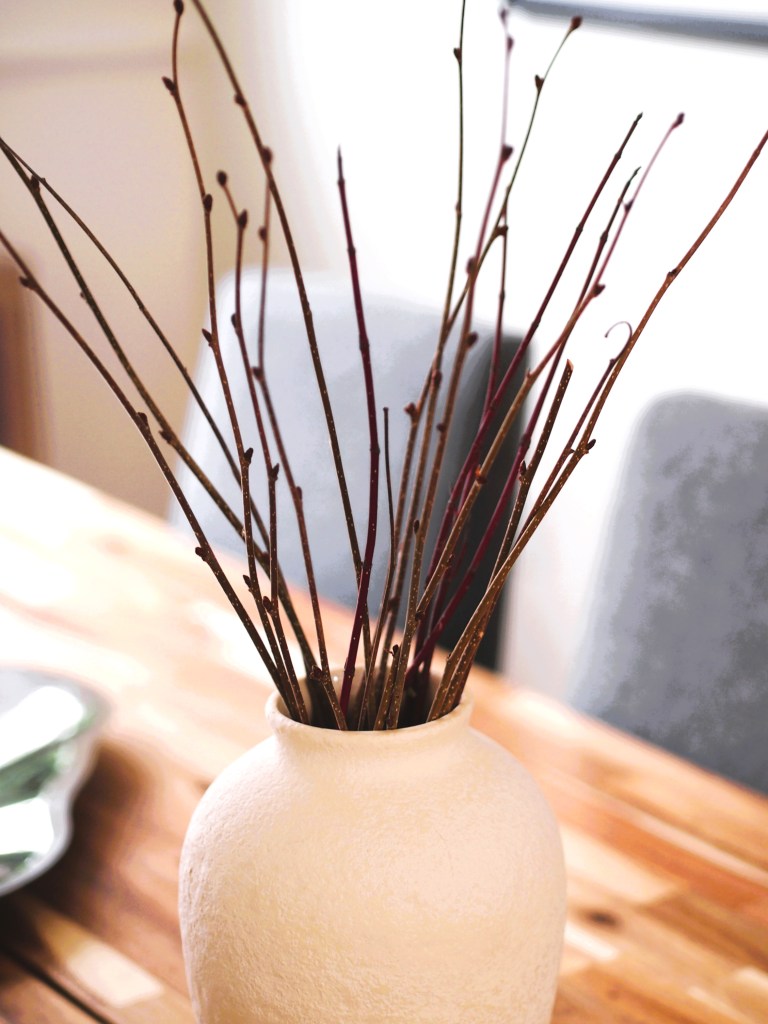
Trees are magnificent symbols of spring, trees and bulbs come into bloom before perennials and annuals. Many trees such as magnolia, cherry, crabapple, redbud and serviceberry bloom even before developing foliage . Old world (which is how North-Americans refer to Europe) mythology and customs is ripe with the symbolism of trees as life-givers. We still have Christmas trees, may and midsummer poles, and in Sweden, we even have the Easter tree: a collection of bare branches in a vase decorated with craft eggs and/or feathers to to symbolize the coming of spring.
Academics who have been taught for decades to debunk all myths like to point out that whatever specific spring festival we currently celebrate is either semi-modern, Christianized, reconstructionist or made up entirely to suit the modern Pagan’s nostalgia for the past, but to me this is all completely besides the point. The idea that trees carry souls, that these mighty beings are the power of the fertile earth incarnate, is ancient. In Norse mythology, which exists for us through stories that where written down by Christian scholars in the early middle ages, the model of the universe is a world tree, Yggdrasil. The first man and woman where created from driftwood. And this is just one example, sacred trees have existed in nearly every ancient culture across the face of the earth.
Pan – Pastoral Paradise and Deep Despair
From what we know, Pan was not a major god in classical Greece. A nature deity connected to rural life and nomadic shepherds, Pan is a very old god indeed, originating from the region of Arcadia, a historical place wrapped in legend and mystery as a pastoral paradise. Pan worship precedes the Olympic pantheon, and it was already on decline during Antiquity. The specific shape of the worship of Pan further shows that this deity precedes life in the city-states and sophisticated mystery religions in temples: Pan was only worshipped in the countryside, primarily in caves where goats where sacrificed to secure a successful hunt, either in late autumn or very early spring. The celebrations continued in Roman times, through the Faunalia, the feast of Faunus (Roman Pan) which was held in early December and then again in February.
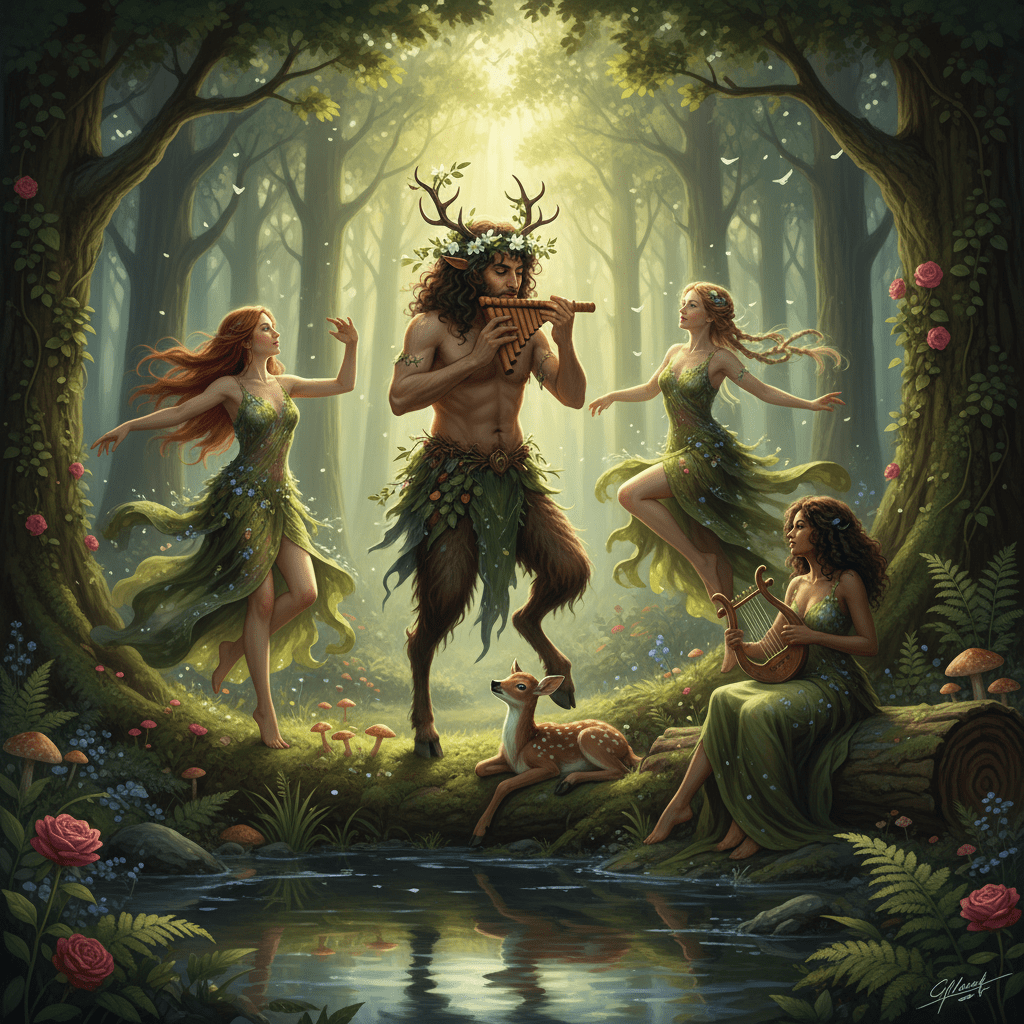
The dual aspects of Pan, horned god of the wild hunt that heralds winter and at the same time a representation of the wild, untamed and lustful forces that bring about the resurrection of nature in spring, makes him interesting. There are other dualities too. Pan is often viewed as a peaceful patron of shepherds playing a calm tune on his flute in an idyllic pastoral environment, but he also paralyzed wandering shephereds with the specific type of anxiety and fear you feel when lost in the remote wilderness. The word “panic” comes from Pan. Add intense lust and desire to the dread and anxiety and Pan becomes the master of strong emotions, a god of passions. Interestingly, the Greek word “Pan” means everything – and somehow this remote, sidelined half-goat of a deity expressed the totality of the cycles of nature as well as the different aspects of human nature. With such an incredibly wide span of symbolism, Pan has inspired countless poets and painters throughout the ages.
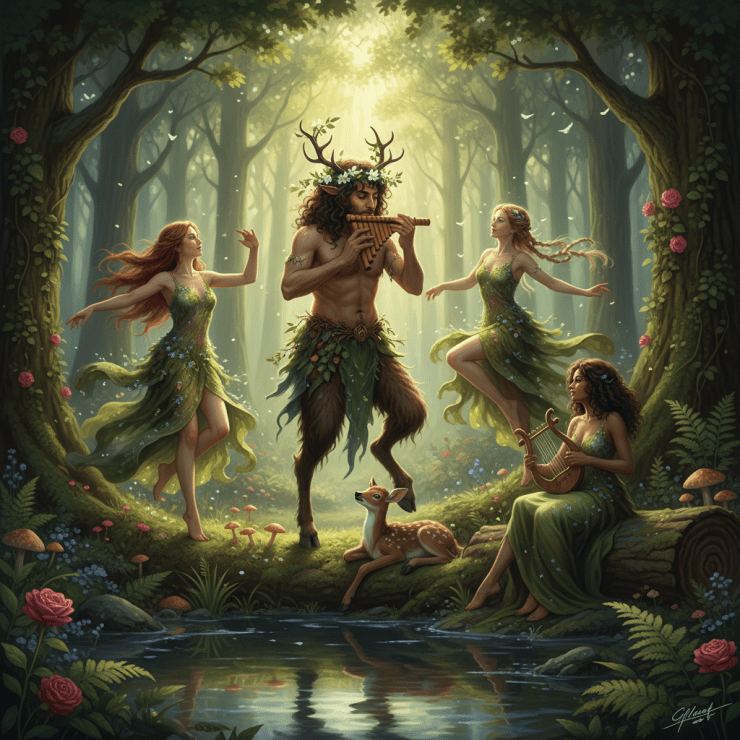
Wild God, who lifted me from earth,
Who taught me freedom, wisdom, mirth,
Immortalized my body’s worth, –
Blow, blow your pipes! And from afar
I’ll come – I’ll be your bird, your star,
Your wood, your nymph, your kiss, your rhyme,
And all your godlike summer-time!
Leonora Speyer (1872-1956)
Pan shows us the need for balance on many levels. He invites us into the wild without and the wild within. As a master of passions and duality of extremes, he mirrors our own duality and polarization of intellect and desire, masculine and feminine, forcing us to balance the two. We can’t suppress one in favor of the other. Nature operates from a delicate balance that keeps making life possible, allowing this incredible world to keep recreating itself over and over again. Extreme weather events can wipe out cities and ecosystems, while sometimes being necessary, such as regular forest wildfires that improves the fertility of the earth.
Pan represents the wild, archaic forest, a place that many of us are far away from in our day-to day lives and need to bring closer in on order to balance out the fast-paced life in our high-tech society where we are surrounded by man-made things and the constant buzz of words. He also personifies the masculine principle of expansion that grows stronger in nature as spring arrives. Pan brings action into our lives, and our work is to figure out how to use it wisely.
Bringing the Story to Life
As you’ve noticed, spring is saturated with spiritual and magical symbolism. Hopefully you have enough information and inspiration about spring to create your own spring celebrations. Remember that its all about creative association. Re-enact your spring story through ritual, writing a short story, creating jewelry, painting a picture, making or finding a statue of a deity and blessing it, hosting a spring party in your roleplaying campaign, sowing seeds, or just by going for a walk and look for early spring flowers.
I’ve learned to always begin with and prioritize inner work, meditation, journeying etc. over spells and rituals to achieve real transformation. Your spiritual power is within you, your inner teacher, the true you that’s not your body, your divine center and connection to God – it is there – and if you can’t access the spiritual plane within it will be exceptionally hard to connect with the realm of spirit in the world around you. That said, once the connection to your inner wilderness is established, let that creative energy flow out in the world and enchant it with purpose and joy. The culmination of my own story about sacrifice, equilibrium, trees and the god of the untamed wilds is the dedication of a birch wand that I made last September, stay tuned for that!
Suggested Reading
James George Frazer – the Golden Bough
Ronald Hutton – The Triumph of the Moon
Melusine Draco – Pan: Dark Lord of the Forest and Horned God of the Witches
Barbara Nolan – A Year of Pagan Prayer


One thought on “The Spiritual and Magical Meaning of Spring”